
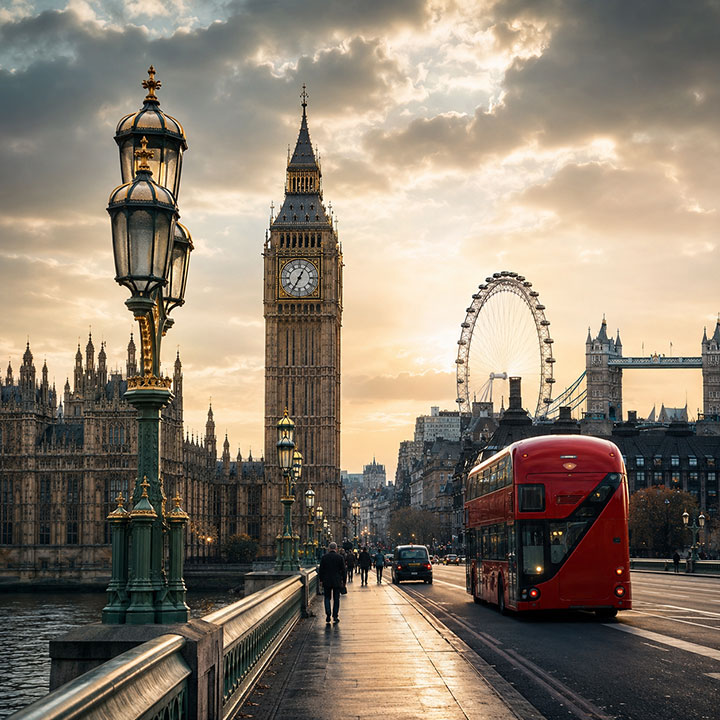
Sustainability, Tourism and the Future of Heritage
The “Sustainability, Tourism and the Future of Heritage” chapter explores the critical 21st-century challenge of balancing London’s global appeal as a premier travel destination with the urgent need for environmental and cultural preservation. Moving from the traditional “Mass Tourism” models of the past to a vision of “Responsible Stewardship,” this sub-category examines how the city’s heritage sites are adapting to climate change and increasing visitor numbers. To study this branch is to analyze the “Sustainable Blueprint for History,” revealing how London uses green technology, inclusive design, and community-led storytelling to ensure its ancient and modern landmarks remain resilient and relevant for future generations.
Sustainable Tourism
Prehistory represents the foundation of the British story, a 5,000-year mystery of survival and sacred landscapes. This is the era of the first Britons, nomadic hunter-gatherers who transformed into the island’s first settled farmers. They were the original architects, reshaping the earth itself to align with the stars and honor their ancestors. This “Deep Time” establishes the origins of tribal territories and sacred geography that every subsequent civilization in Britain would inherit.

- Stonehenge and Avebury: These are the twin pillars of the Neolithic ritual landscape, representing the pinnacle of ancient engineering and solar alignment. These sites are located in Wiltshire.
- The Rollright Stones: An enigmatic prehistoric complex consisting of three distinct monuments including the King’s Men stone circle. These stones are located in the Cotswolds on the borders of Oxfordshire and Warwickshire.
- The Cumbrian Mountains: Home to ancient rock formations and early settlements that were deeply carved by glacial movements. This region is located in the Lake District.
- Dartmoor: A wild granite plateau containing dramatic Bronze Age stone rows, hut circles, and burial mounds. This landscape is located in Devon.
- Maiden Castle: The largest and most complex Iron Age hill fort in Britain, showcasing advanced tribal defense engineering. This site is located in Dorset.




Heritage Conservation
The “Heritage Conservation” chapter explores the “Art of Survival,” analyzing the technical, ethical, and legal frameworks that allow London’s historic fabric to endure within a rapidly modernizing metropolis. This sub-category moves beyond mere preservation to examine “Adaptive Management”—the process of retrofitting ancient structures with 21st-century technology while protecting their “Outstanding Universal Value.” To study heritage conservation is to witness the “Science of Longevity,” revealing how master craftsmen, architects, and conservators use both traditional skills and digital innovation to combat the effects of pollution, climate change, and urban density.
- The Houses of Parliament (Restoration & Renewal): A massive, multi-decade conservation project aimed at saving the crumbling Victorian Gothic masterpiece from structural failure and fire risk. This site is located in Westminster.
- The Elizabeth Tower (Big Ben): Recently emerged from a five-year conservation program that involved the meticulous cleaning of 3,433 cast-iron roof tiles and the restoration of the clock’s original Victorian color scheme. This tower is located in Westminster.
- St Paul’s Cathedral (Wren’s Legacy): A continuous conservation site where the Great Model and the historic library are preserved using advanced climate-control technology to protect the architect’s 1710 vision. This cathedral is located in the City of London.
- The Tower of London (The White Tower): A site where conservators manage the delicate balance between high-volume tourism and the preservation of 1,000-year-old Caen stone and medieval timber. This castle is located in the City of London.
- Somerset House: A premier example of successful conservation-led regeneration, where the neoclassical courtyard was restored to serve as a world-class public space and cultural venue. This building is located in the Strand.
- The Royal Naval College (The Painted Hall): Known as the “Sistine Chapel of the UK,” this site underwent a groundbreaking open-access conservation project that allowed the public to see restorers working on the 40,000 square feet of baroque ceiling art. This college is located in Greenwich.
Climate and Historic Buildings
The “Climate and Historic Buildings” chapter examines the “Environmental Resilience of Heritage,” analyzing how Britain’s most significant architectural treasures are adapting to the accelerating challenges of a changing climate. Moving beyond traditional maintenance, this sub-category explores the “Modern Engineering of Preservation”—from the installation of invisible flood defenses to the retrofitting of ancient stone with carbon-neutral heating systems. To study this branch is to witness the “Balance of Continuity,” revealing how the UK’s historic environment serves as both a vulnerable record of the past and a pioneering laboratory for sustainable urban design.
- The Houses of Parliament (Restoration & Renewal): A primary site where climate-proofing and fire safety are being integrated into the 19th-century Gothic fabric to protect the seat of government for future centuries. This building is located in Westminster.
- St Paul’s Cathedral (Dome & Drainage): A masterpiece of baroque engineering that uses advanced cleaning and water-management techniques to protect Wren’s Portland stone from the effects of modern pollution and heavy rainfall. This cathedral is located in the City of London.
- The Thames Barrier: The UK’s most critical piece of climate-resilient infrastructure, designed to protect London’s historic waterfront and millions of citizens from the rising power of the sea. This barrier is located in Woolwich.
- The National Trust (Climate Adaptation Sites): Locations where the impact of soil erosion and temperature shifts on historic foundations is being actively managed through nature-based solutions and heritage science. These sites are located across the UK, with primary administrative links in London.
- London Museum 2026 (Smithfield): A flagship project in “Adaptive Reuse,” transforming Victorian market buildings into a sustainable museum that minimizes its carbon footprint by recycling existing historic structures. This site is located in Smithfield, City of London.
Accessibility and Inclusive tourism
The “Accessibility and Inclusive Tourism” chapter explores the “Universal Design of the City,” analyzing how London is being physically and digitally re-engineered to ensure that its world-class heritage is accessible to everyone, regardless of physical or cognitive ability. This sub-category moves beyond mere compliance to examine “Empathetic Stewardship”—where the inclusion of wheelchair users, neurodivergent visitors, and those with sensory impairments is integrated into the very fabric of the tour experience. To study this branch is to analyze the “Social Architecture of Belonging,” revealing how step-free access, tactile interpretation, and quiet-zone planning are making the “Legacy & Layers” of London available to a truly global and diverse audience.
- The National Portrait Gallery (NPG): A flagship for accessibility following its 2023 refurbishment, featuring state-of-the-art lift access to all galleries, step-free viewing zones for every portrait, and comprehensive tactile and audio-described tours.
- The Elizabeth Line: A 21st-century engineering marvel and a global benchmark for inclusive transit, offering 100% step-free access from street to train across its entire network.
- Southbank Centre: A primary site for democratic culture that prioritizes physical accessibility and “Relaxed Performances,” ensuring that the arts are inclusive for neurodivergent audiences and those with disabilities.
- Royal Museums Greenwich: A UNESCO World Heritage site that has integrated modern lifts and accessible pathways into its historic naval and astronomical buildings, including the Cutty Sark and the National Maritime Museum.
- The Houses of Parliament (Restoration & Renewal): A current conservation project that has placed “Inclusive Access” at the heart of its mission, aiming to make one of the world’s most complex 19th-century buildings navigable for all future citizens.
- The London Transport Museum: Housed in a Victorian market, the museum features fully accessible galleries and historic vehicles that have been adapted to tell the story of the city’s movement to everyone.
Digital Heritage and Live Broadcasting
The “Digital Heritage and Live Broadcasting” chapter explores the “Virtual Frontier of Culture,” analyzing how high-definition streaming, 3D scanning, and live broadcasting are redefining the relationship between the physical site and the global audience. This sub-category moves beyond traditional media to examine “Immersive Interpretation”—where digital technology allows learners to experience restricted or fragile locations, such as royal chapels or conservation laboratories, from anywhere in the world. To study digital heritage is to witness the “Democratic Expansion of Knowledge,” revealing how London’s major institutions use the “Digital Architecture of the Future” to make British history more accessible, interactive, and resilient.
- Outernet London: An immersive digital district featuring the world’s largest high-definition LED screens, serving as a flagship for how digital media and live broadcasting create new public cultural experiences. This site is located in Charing Cross Road.
- The BBC Broadcasting House: The “Sonic Cathedral” and headquarters of the world’s oldest national broadcaster, representing a century of live broadcasting that projects British values and culture to the world. This building is located in Portland Place.
- The British Museum (Digital Collections): A world leader in high-resolution 3D scanning and online curating, allowing visitors to explore objects like the Rosetta Stone in extreme detail from their own devices. This site is located in Bloomsbury.
- BT Tower: A 1960s icon of the communications revolution that served as the primary hub for Britain’s television and radio broadcasting networks for decades. This tower is located in Fitzrovia.
- The Royal Opera House (Live Cinema Season): A premier site for high-definition live broadcasting, where world-class performances are transmitted from the stage in Covent Garden to cinemas globally in real-time. This venue is located in Covent Garden.
- The National Portrait Gallery (Digital Interpretation): Following its 2023 “Inspiring People” project, the gallery has integrated advanced digital storytelling and QR-linked audio-visual content to bridge the gap between historic portraits and modern learners.
Responsible Travel
The “Responsible Travel” chapter explores the “Ethical Compass of Tourism,” analyzing how visitors and tour operators can minimize their environmental and social impact while maximizing the positive contributions to local communities. Moving beyond traditional “sightseeing,” this sub-category examines “Conscientious Exploration”—where travelers are encouraged to engage with London’s heritage through sustainable transport, local commerce, and respectful cultural interaction. To study responsible travel is to analyze the “Social Responsibility of the Visitor,” revealing how individual choices—from using the Tube to supporting independent East End artisans—sustain the authentic character and longevity of Britain’s world-class destinations.
- The Elizabeth Line: A 21st-century engineering marvel that serves as a global benchmark for sustainable urban transit, providing high-capacity, low-carbon movement across the city. This line connects major hubs like Paddington, Farringdon, and Canary Wharf.
- The Thames Path: A 184-mile National Trail that encourages carbon-neutral “slow travel,” allowing visitors to explore London’s industrial and royal layers on foot. This path runs along both banks of the River Thames.
- Old Spitalfields Market: A historic center for independent trade that provides a platform for local designers and artisans, representing the “economic sustainability” of community-based commerce. This market is located in Spitalfields.
- Richmond Park: The largest of the Royal Parks, where responsible visitors follow “Leave No Trace” principles to protect the historic deer herds and urban biodiversity. This park is located in Richmond, London.
- The London Transport Museum: Housed in a Victorian market, the museum interprets the history of public transit as the primary tool for sustainable urban growth and movement. This museum is located in Covent Garden.
- The Queen Elizabeth Olympic Park: A permanent legacy of sustainable urban regeneration, transforming industrial wasteland into a biodiverse public space that prioritizes long-term environmental health. This park is located in Stratford.
The Future of Museums and Visitor Experience
The “Future of Museums and Visitor Experience” chapter explores the “21st-Century Cultural Revolution,” analyzing how technology, inclusive storytelling, and immersive design are redefining the relationship between the visitor and the past. Moving beyond the traditional “glass-case” model of the 19th century, this sub-category examines the shift toward “Co-Curated History”—where museums act as dynamic social spaces that encourage active participation and critical debate. To study this branch is to analyze the “Blueprint for the Next Generation,” revealing how London’s major institutions are evolving to remain relevant in a digital, diverse, and globally connected world.
- London Museum 2026 (Smithfield): A flagship project designed around the “Future of Urban Storytelling,” integrating the historic General Market’s architecture with high-tech, sensory-driven galleries that reflect the lived reality of every Londoner. This site is located in Smithfield, City of London.
- The Science Museum (Technicians Gallery): An innovative, hands-on space that moves away from static objects to focus on the human skills and processes behind global progress, representing a new model for “Vocational Interpretation.” This gallery is located in South Kensington.
- Outernet London: A pioneer in the “Immersive Visitor Experience,” using the world’s largest high-definition LED screens to blend music, art, and heritage into a free, public digital spectacle. This site is located in Charing Cross Road.
- The National Portrait Gallery (Inspiring People Project): Following its 2023 reopening, the gallery features a radically redesigned visitor flow, a new public forecourt, and digital “story-trails” that allow guests to personalize their journey through British identity. This gallery is located in St Martin’s Place.
- The Young V&A (Bethnal Green): A museum co-designed with children for children, serving as a global benchmark for “Participatory Museology” and showing how heritage can be curated to foster the next generation of creative thinkers. This museum is located in Bethnal Green.
- The British Museum (Great Court): A stunning architectural intervention by Norman Foster that serves as a permanent symbol of the “Museum as a Public Square,” transforming a former library into a democratic, light-filled hub for the world. This site is located in Bloomsbury.