
Monarchy, Power and the State
This branch explores the intricate “machinery” of the British State, where the ceremonial meets the constitutional. It is the story of how power has shifted from the absolute rule of medieval kings to a system where the Sovereign reigns but does not rule. Understanding this relationship is essential to decoding the British identity, as it explains how ancient institutions like the Livery Companies and the City of London Government maintain their unique status within a modern democracy. This is the theatre where the “unwritten constitution” is performed through rituals, law, and the physical geography of London’s streets, providing a level of stability that has endured for centuries.
Royal London
This branch explores the physical stage of the British Monarchy, focusing on the historic and ceremonial geography that links the City of London with the City of Westminster. It traces the movement of the Royal Court from the medieval fortress of the Tower of London to the grand baroque and neoclassical palaces of the West End. This narrative reveals how the architecture of power evolved from defensive strongholds to public-facing ceremonial landmarks, creating the iconic “Royal” character that defines London’s global image today. Understanding this geography is the key to decoding the centuries-old relationship between the Sovereign, the people, and the physical fabric of the capital.

- Westminster Abbey: The essential setting for every coronation since 1066 and a site of profound royal memory, housing the tombs of monarchs from the medieval age to the house of Hanover. This abbey is located in Westminster.
- The Tower of London: A historic royal palace and fortress that has protected the Crown Jewels for centuries and served as the primary symbol of royal authority in the City. This fortress is located in the City of London.
- Buckingham Palace: The official London residence of the Sovereign and the administrative heart of the Monarchy, famous for its iconic balcony appearances and state rooms. This palace is located in Westminster.
- Hampton Court Palace: The magnificent Tudor and Baroque palace that served as the primary countryside retreat for the court, showcasing the immense wealth and ego of monarchs like Henry VIII. This palace is located in East Molesey, Surrey.
- Kensington Palace: A working royal residence that has been the home of young royals for over 300 years, from Queen Victoria to the modern Prince and Princess of Wales. This palace is located in Kensington.
- St James’s Palace: The senior palace of the Sovereign and the location where the Accession Council meets to proclaim a new monarch following the death of the previous one. This palace is located in St James’s.
- The Mall: The grand, red-surfaced ceremonial route designed for spectacular royal processions and state occasions connecting Trafalgar Square to Buckingham Palace. This road is located in Westminster.




British Institutions and Governance
The “British Institutions and Governance” chapter explores the formal structures of power that have exported the “Westminster Model” of democracy and law to every corner of the globe. From the medieval foundations of the monarchy and the “Mother of Parliaments” to the modern civil service at Whitehall, these institutions represent the nation’s enduring commitment to constitutional stability and the rule of law. This study reveals the “Architecture of Authority,” showing how the concentration of executive, legislative, and religious institutions in London has shaped the global standards for governance and state honor. To explore this branch is to analyze the “Global Operating System” that continues to underpin the administrative and legal structures of the modern world.
- The Houses of Parliament: The iconic seat of the UK government, representing the export of parliamentary democracy and the site of constant debate that refines modern laws. This building is located in Westminster.
- Buckingham Palace: The official London residence of the British monarch since 1837 and the primary setting for state occasions and national celebrations. This palace is located in Westminster.
- The Tower of London: A 1,000-year-old fortress and royal palace that houses the Crown Jewels and reflects the city’s medieval origins and the power of the state. This castle is located in the City of London.
- The Royal Courts of Justice: A Gothic masterpiece where the UK’s high-level civil cases are heard, representing the intersection of ancient legal tradition and modern music-themed drama, such as Paul McCartney’s 2008 divorce case. This building is located in the Strand, London.
- Whitehall: The ceremonial thoroughfare lined with major government departments and the Cenotaph, acting as the administrative heart and focused center of national remembrance. This street is located in Westminster.
- The BBC Broadcasting House: The headquarters of the world’s oldest national broadcaster, serving as a “sonic cathedral” that projects British values and culture to a global audience. This building is located in Portland Place, London.
Constitutional change
This era explores the remarkable evolution of the British state from an absolute monarchy to a sophisticated parliamentary democracy without the need for a single written constitution. It is a story of pragmatism, precedent, and the gradual shifting of power confirmed through landmark charters and legal battles. This narrative highlights how Britain’s “unwritten” system relies on a thousand years of tradition and common law to maintain a delicate balance between the Crown, the Parliament, and the Judiciary. To study this branch is to understand the “hidden” rules that allow one of the world’s oldest continuous governments to remain flexible and stable in a rapidly changing world.
- The Palace of Westminster: The heart of British democracy where the House of Commons and House of Lords debate and pass the laws that govern the nation under the Sovereign’s constitutional authority. This palace is located in Westminster.
- The Royal Courts of Justice: The Gothic seat of the high court and court of appeal where the independence of the judiciary is performed daily, ensuring that no citizen or state power is above the law. This building is located in the Strand, London.
- Salisbury Cathedral: Home to the finest original 1215 Magna Carta, the foundational document that first established the principle that even the King is subject to the rule of law. This cathedral is located in Salisbury.
- Runnymede: The historic meadow where King John sealed the Magna Carta in June 1215, marking a pivotal moment in the birth of constitutional government. This site is located near Egham, Surrey.
- Guildhall: The site where the City of London’s unique rights and independence were formalized, including the historic 1215 charter that allowed the citizens to elect their own Lord Mayor. This building is located in the City of London.
- St Stephen’s Hall: Located within the Palace of Westminster on the site of the original medieval royal chapel where the House of Commons first met for centuries. This hall is located in Westminster.
Court culture
This branch examines the sophisticated “theatre of the court,” where art, etiquette, and architecture were used as tools of political power and social exclusion. It is a study of how the personal presence of the monarch was amplified through magnificent surroundings, specialized court offices, and the intricate rituals of the Royal Household. From the chivalric traditions of the medieval court to the refined elegance of the Baroque and Georgian periods, this narrative reveals how the court served as a hub for cultural innovation, attracting the finest artists, musicians, and thinkers of the age. Understanding court culture is essential to decoding the visual language of Britain’s royal palaces and the enduring traditions of the modern Royal Household.
- Westminster Abbey: The supreme stage for the ultimate court ritual, the Coronation, and the final resting place for monarchs whose tombs are masterpieces of courtly art and heraldry. This abbey is located in Westminster.
- Hampton Court Palace: The magnificent setting for the “Great Hall” and the Tudor and Baroque staterooms where the court performed its most public and private rituals. This palace is located in East Molesey, Surrey.
- St James’s Palace: The senior palace of the Sovereign and the official seat of the Royal Court, where ambassadors are still formally accredited to “the Court of St James’s.” This palace is located in St James’s.
- The National Portrait Gallery: Home to the “faces of power,” where the portraits of monarchs and their courtiers reveal the evolving fashions, status symbols, and visual branding of the court across centuries. This gallery is located in St Martin’s Place, London.
- The King’s Gallery: A dedicated space within Buckingham Palace for showcasing the treasures of the Royal Collection, representing the pinnacle of royal patronage and collecting. This gallery is located in Westminster.
- Banqueting House: The sole survivor of the Palace of Whitehall, featuring the magnificent Rubens ceiling that serves as a grand visual manifesto of the “Divine Right of Kings.” This building is located in Whitehall.
Regency and aristocratic society
This era explores the height of British high society, characterized by the refined elegance, wit, and social hierarchy of the early 19th century. Under the influence of the Prince Regent, London was transformed into a sophisticated capital of fashion and neoclassical architecture, with grand “terraced” developments and exclusive gentlemen’s clubs defining the urban character of the West End. This narrative traces the lives of the “ton”—the aristocratic elite—whose movements between their grand country estates and their London “townhouses” dictated the rhythm of the social season. It is a story of contrast, where the pursuit of pleasure and aesthetic perfection coexisted with the political intrigue and social tensions of a rapidly changing nation.
- Marylebone and Mayfair: The quintessential aristocratic districts, developed with grand squares and stuccoed terraces to provide the ultimate setting for the Regency social season. These neighborhoods are located in the City of Westminster.
- The Royal Academy of Arts: Founded to promote the arts and design, it became a central pillar of Regency cultural life and a venue for the elite to display their taste and status. This academy is located in Burlington House, Piccadilly.
- The Wallace Collection: A world-class collection of fine and decorative arts housed in a grand aristocratic townhouse, offering an intimate glimpse into the opulent lifestyle of the 19th-century elite. This museum is located in Manchester Square, London.
- Apsley House: Known as “Number 1, London,” this was the grand townhouse of the Duke of Wellington, representing the pinnacle of aristocratic achievement and Regency architectural taste. This house is located at Hyde Park Corner.
- Regent’s Park and the Regent’s Canal: The centerpieces of John Nash’s grand urban vision for the Prince Regent, designed to create a “royal mile” of parkland and palatial villas. These sites are located in North-West London.
- The Theatre Royal Drury Lane: A primary venue for Regency entertainment and a key site for the performance of social status among the upper classes during the London season. This theatre is located in Covent Garden.
Parliament and democracy
This branch focuses on the “Grandmother of Parliaments,” the cradle of the Westminster system that has been exported to democracies across the globe. It is the story of how a medieval advisory council for the King evolved into the supreme legislative body of the United Kingdom through centuries of civil war, reform, and radical protest. This narrative highlights the unique traditions and “theatre” of the British democratic process, where ancient rituals like the State Opening of Parliament coexist with the modern reality of political debate. To explore this branch is to understand the physical and symbolic heart of British power, where every stone tells a story of the hard-won fight for representation and the rule of law.
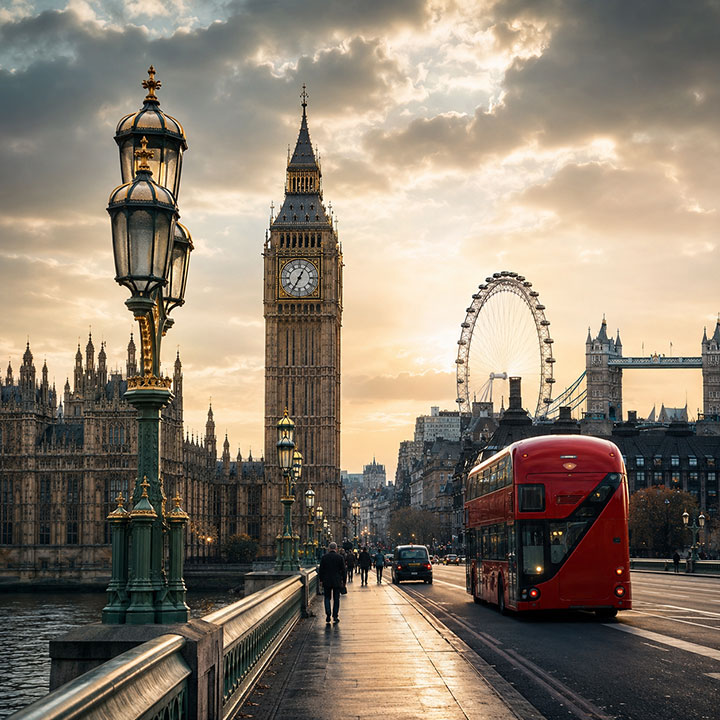
- The Palace of Westminster: The magnificent Gothic Revival seat of the House of Commons and the House of Lords, featuring the iconic Big Ben and the historic Westminster Hall. This palace is located in Westminster.
- Westminster Hall: The oldest surviving part of the original Palace, where the Trial of Charles I took place in 1649 and where monarchs and statesmen lie in state today. This hall is located within the Palace of Westminster.
- Parliament Square: A grand public square surrounded by the symbols of state power, featuring statues of global democratic icons from Winston Churchill to Nelson Mandela and Millicent Fawcett. This square is located in Westminster.
- The Cenotaph: The focal point of national remembrance where the political leaders and the people gather to honor those who fell in service to the state and democracy. This monument is located in Whitehall.
- Trafalgar Square: A historic site of national gathering, celebration, and public protest, where the voice of the people has been heard for generations on the steps of the National Gallery. This square is located in the City of Westminster.
- The National Portrait Gallery: Home to the portraits of the great reformers, suffragettes, and statesmen who fought for the expansion of voting rights and the modernization of British democracy. This gallery is located in St Martin’s Place, London.
Law, justice and the courts
This branch examines the foundations of the English legal system, which is based on common law, precedent, and the absolute independence of the judiciary. It is a narrative that spans from the signing of the Magna Carta to the complex legal dramas of the modern age, highlighting how the concept of “justice for all” is physically performed in London’s historic courtrooms. The story of the law in Britain is also a story of its unique districts, such as the Inns of Court, where for over 700 years the legal profession has been trained and housed in a collegiate, monastic-like atmosphere. Understanding this system is essential to decoding how the rights of the individual are protected and how the “unwritten” constitution is interpreted and upheld.
- The Royal Courts of Justice: A masterpiece of Victorian Gothic architecture housing the High Court and Court of Appeal, representing the supreme authority and independence of the English judiciary. This building is located in the Strand, London.
- The Old Bailey: The Central Criminal Court of England and Wales, built on the site of the notorious Newgate Prison and crowned by the iconic golden statue of Lady Justice. This court is located in the City of London.
- Salisbury Cathedral: The historic home of the finest original 1215 Magna Carta, the foundational document that established the legal principle that no one is above the law. This cathedral is located in Salisbury.
- Guildhall: The site of the City of London’s historic courts and administrative power, where the Mayor’s and City of London Court has operated for centuries. This building is located in the City of London.
- The Temple: A private legal precinct containing the Inner Temple and Middle Temple, two of the four Inns of Court, featuring the historic 12th-century Temple Church. This area is located between Fleet Street and the River Thames.
- The Strand: A historic legal corridor where major music-world legal milestones, such as the high-profile divorce of Paul McCartney, have played out within the halls of the Royal Courts of Justice. This street is located in the City of Westminster.
City of London government
This branch explores the unique and ancient governance of the “Square Mile,” a jurisdiction that remains distinct from the 32 London boroughs. It is the story of a 1,000-year-old corporation that has its own police force, its own Lord Mayor, and roots stretching back to Anglo-Saxon times. The City of London operates under a “time-honored” constitution, where the Lord Mayor acts as the global ambassador for the UK’s financial services, maintaining traditions that even the Sovereign must formally respect. Understanding this government is essential to decoding the “City’s” role as a separate entity with its own income sources, ceremonial duties, and a political structure that has remained remarkably stable throughout British history.
- Guildhall: The administrative heart of the City for over 800 years, where the Court of Common Council meets and the Lord Mayor is elected in a ceremony of ancient tradition. This building is located in the City of London.
- Mansion House: The official residence of the Lord Mayor of the City of London, serving as the setting for magnificent state banquets and the annual “Easter Banquet.” This house is located in the City of London.
- The Old Bailey: The Central Criminal Court, where the City’s historic responsibility for justice is performed under the iconic statue of Lady Justice. This court is located in the City of London.
- The Royal Exchange: Founded by Thomas Gresham in the 16th century, it represents the City’s long-standing role as a center for global commerce and finance. This building is located in the City of London.
- Temple Bar: The historic gateway where the King is formally met by the Lord Mayor before entering the City, symbolizing the Square Mile’s unique independence and rights. This gateway is now located in Paternoster Square, City of London.
- The Dragon Boundary Marks: Fierce silver and red statues that mark the formal entrances to the City, guarding the boundaries of the Corporation’s jurisdiction. These marks are located at various entry points around the City of London.
Livery Companies
This branch examines the 1,000-year-old trade guilds that provided the original “quality control” for London’s artisans and merchants. These organizations, ranging from the Mercers and Grocers to modern guilds like the Information Technologists, have evolved from powerful medieval monopolies into significant charitable and educational foundations. The Livery Companies remain a vital pillar of the City’s civic life, holding the unique right to elect the Sheriffs and participate in the election of the Lord Mayor at Common Hall. Their history is a narrative of craftsmanship, apprenticeship, and a relentless commitment to professional standards that helped build the City of London into a global commercial powerhouse.
- Guildhall: The historic venue where the “Liverymen” gather annually for Common Hall to exercise their ancient right to elect the City’s high officials. This building is located in the City of London.
- Mercers’ Hall: The headquarters of the “Premier” Livery Company, representing the historic importance of the cloth trade and the immense wealth of the City’s guilds. This hall is located in Ironmonger Lane, City of London.
- Apothecaries’ Hall: One of the oldest and most atmospheric livery halls, representing the guild responsible for the regulation of medicine and the origins of the pharmaceutical profession. This hall is located in Blackfriars Lane, City of London.
- Stationers’ Hall: The home of the company that once held the monopoly on printing and publishing, where the “entry at Stationers’ Hall” provided the world’s first copyright protection. This hall is located near St Paul’s Cathedral, City of London.
- The Vintners’ Hall: The headquarters of the guild responsible for the wine trade, which maintains the unique tradition of “Swan Upping” on the River Thames alongside the King. This hall is located in Upper Thames Street, City of London.
- Fishmongers’ Hall: A magnificent Greek Revival building representing one of the oldest livery companies, which still maintains its historic role in inspecting fish at Billingsgate Market. This hall is located at London Bridge, City of London.
Prime ministers and political leadership
This branch explores the history of British executive power, from the emergence of the first Prime Minister in the 18th century to the global leadership of the modern era. It is a narrative of statecraft, personal ambition, and the evolution of the Cabinet system within the framework of a constitutional monarchy. This story highlights how leaders have navigated national crises, from the industrial revolution and world wars to the complexities of the 21st century, often operating from the unassuming black door of 10 Downing Street. Understanding this leadership is essential to decoding how policy is forged and how the UK projects its influence on the world stage through the office of the Prime Minister.
- 10 Downing Street: The world-famous official residence and office of the British Prime Minister since 1735, serving as the nerve center of the UK government. This building is located in Westminster.
- The Palace of Westminster: The primary arena where Prime Ministers must defend their policies during Prime Minister’s Questions, representing the ultimate test of political leadership and accountability. This palace is located in Westminster.
- The Foreign, Commonwealth and Development Office: A masterpiece of Victorian architecture that serves as the headquarters for British diplomacy and the projection of political leadership abroad. This building is located in Whitehall.
- The National Portrait Gallery: Home to the portraits of Britain’s most influential Prime Ministers, from Robert Walpole and William Pitt the Younger to Winston Churchill and Margaret Thatcher. This gallery is located in St Martin’s Place, London.
- Old Treasury Building: Part of the grand administrative complex on Whitehall where the financial and strategic decisions of the government have been executed for centuries. This building is located in Whitehall.
- St Margaret’s Church: Known as the “parish church of the House of Commons,” it has long been a place of worship and commemoration for the nation’s political leaders. This church is located in Westminster.
Protest, reform and civil rights
This branch examines Britain’s long and often turbulent history of public dissent and the relentless fight for social justice, equality, and the right to vote. It is a story of ordinary people—from the Chartists and the Suffragettes to modern activists—who have challenged the status quo to expand the boundaries of British democracy. This narrative highlights how London’s streets and squares have served as a vital stage for public voice, where protests have led to landmark legislation that fundamentally reshaped the nation’s social fabric. To study this branch is to understand the “people’s history” of Britain, where the power of collective action has consistently driven the evolution of civil rights and individual liberty.
- Trafalgar Square: A historic and primary site for national protest and public gathering, where voices from every era of British activism have been heard beneath Nelson’s Column. This square is located in the City of Westminster.
- Parliament Square: The symbolic heart of the state where the statue of Millicent Fawcett stands as a permanent tribute to the struggle for women’s suffrage and democratic reform. This square is located in Westminster.
- The Peterloo Massacre Memorial: Commemorating a pivotal and tragic moment in the 1819 struggle for parliamentary representation, which became a catalyst for the Great Reform Act. This memorial is located in Manchester.
- The National Archives: A primary repository for the historic petitions, radical pamphlets, and legal records that document the long journey of British civil rights. This institution is located in Kew, Richmond.
- Cable Street: The site of the 1936 “Battle of Cable Street,” where local residents successfully united to block a provocative march by the British Union of Fascists. This street is located in Stepney, East London.
- The British Library: Home to the landmark documents of reform, including original manuscripts related to the abolition of the slave trade and the expansion of the franchise. This library is located in Euston Road, London.