
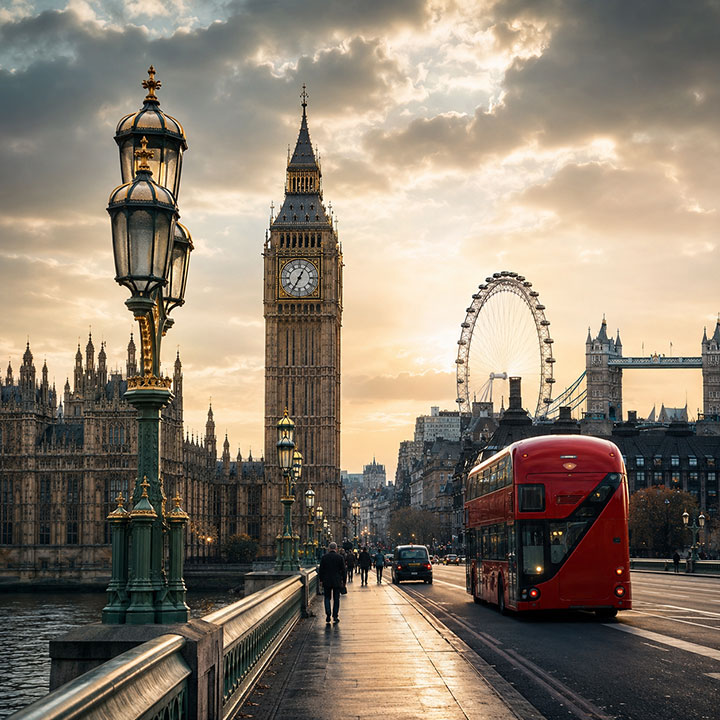
London Through Time
The story of London is a narrative of constant reinvention, where each century has built directly upon the foundations of the last. From its origins as a Roman frontier outpost to its current status as a global financial and cultural powerhouse, the city has survived fire, plague, and war to emerge as a world leader. Understanding London “through time” is the essential key to decoding the unique character of its streets, where medieval alleyways sit in the shadow of glass skyscrapers. To explore this branch is to witness the relentless resilience of a city that has been the beating heart of the nation for nearly two millennia.
Roman London
Roman London, or Londinium, provided the very “bones” of the modern city, establishing the site as the primary commercial and administrative hub of the province. Founded around 43 AD, it quickly became a sophisticated urban center with a forum, a basilica, and an amphitheatre, all enclosed within a massive defensive wall. The Romans chose this location for its strategic position on a tidal river, allowing for deep-water trade while remaining far enough inland to be safe. Today, the traces of this imperial capital remain hidden beneath the feet of modern Londoners, waiting to be discovered.

- The London Wall: A significant and visible remnant of the original Roman defensive circuit that protected the city for over a thousand years. This site is located at Tower Hill in the City of London.
- The Guildhall Amphitheatre: The rediscovered remains of the city’s primary venue for public spectacles and gladiatorial combat, now preserved beneath a modern gallery. This site is located in the City of London.
- The Mithraeum: An atmospheric underground temple dedicated to a Roman mystery cult, featuring hundreds of writing tablets that provide a rare glimpse into daily life. This site is located under the Bloomberg building in the City of London.
- The Basilica and Forum: Once the largest administrative building north of the Alps, the remains of this political heart lie beneath a historic market. This site is located under Leadenhall Market in the City of London.
- Roman Port and Quays: Archaeological evidence of the massive wooden structures that once handled the flow of goods from across the Roman Empire. These remains are located along the banks of the River Thames in the City of London.




Medieval London
Medieval London was a crowded, vibrant, and fiercely independent city that grew rapidly within its Roman walls. This was a period of intense religious activity, seeing the foundation of the great monastic houses and the construction of the first stone London Bridge. It was also an age of civic awakening, where the City’s guilds and the Lord Mayor began to assert their rights against the Crown. Despite the challenges of the Black Death and social unrest, medieval London established the commercial and legal traditions that still govern the Square Mile today.
- The Tower of London: The premier Norman fortress and royal palace that dominated the medieval skyline and served as a prison, armory, and treasury. This fortress is located in the City of London.
- Westminster Abbey: The supreme example of medieval Gothic architecture and the setting for royal coronations, weddings, and burials since the 11th century. This abbey is located in Westminster.
- The Guildhall: The medieval administrative center of the City, featuring a magnificent 15th-century hall that remains the heart of City government. This building is located in the City of London.
- St Bartholomew the Great: A stunning survival of a 12th-century Augustinian priory church, offering a glimpse into the monastic landscape of the medieval city. This church is located in Smithfield.
- Southwark Cathedral: A significant medieval church on the south bank that served the growing population outside the City walls and has deep links to the history of theatre. This cathedral is located in Southwark.
- Old St Paul’s Site: While the medieval cathedral was lost in the Great Fire, its site remains the historic center of the City’s spiritual life and learning. This site is located in the City of London.
City of London
The City of London, or the “Square Mile,” is the historic heart and financial engine of the capital, maintaining a unique status that sets it apart from the rest of the metropolis. This district is a 1,000-year-old organization with its own independent governance, police force, and traditions that stretch back to the Anglo-Saxon era. It is a place of dramatic contrasts, where ancient ceremonies and medieval street layouts like “Cheapside”—meaning shop—exist alongside the cutting-edge architecture of global finance. Understanding the City is essential to decoding how London evolved from a Roman frontier port into a sovereign-like entity that even the King must formally respect when entering its historic boundaries.
- Guildhall: The administrative and ceremonial heart of the City for over 800 years, housing the magnificent 15th-century hall where the Lord Mayor is elected. This building is located in the City of London.
- The Mithraeum: An atmospheric underground temple discovered under the Bloomberg building, revealing the sophisticated religious life of the original Roman citizens. This site is located in the City of London.
- St Paul’s Cathedral: Christopher Wren’s baroque masterpiece that serves as the spiritual center of the Square Mile and a symbol of resilience after the Great Fire. This cathedral is located in the City of London.
- Temple Bar: The historic stone gateway that marks the ceremonial entrance to the City from Westminster, where the King is formally received by the Lord Mayor. This gateway is located in Paternoster Square, City of London.
- The Barbican: A groundbreaking post-war residential and cultural complex built on a site heavily bombed during the Blitz, now home to the majority of the City’s residents. This complex is located in the City of London.
- Leadenhall Market: A beautiful Victorian covered market built upon the site of the original Roman Basilica and Forum, the largest such meeting place in Europe. This market is located in the City of London.
Westminster
Westminster is the seat of royal, political, and religious power in Britain, serving as the ceremonial stage for the nation for nearly a millennium. While the City of London grew as a center of trade, Westminster developed as the center of government, a distinction that created the “two cities” dynamic that still defines London today. It is a landscape dominated by the “theatre of power,” where the “Grandmother of Parliaments” and the coronation church of the monarchy sit side-by-side. To explore Westminster is to witness the physical performance of the British constitution, where history is made through ritual, law, and the enduring architecture of the state.
- Westminster Abbey: The premier royal church and a masterpiece of Gothic architecture, serving as the setting for every coronation since 1066. This abbey is located in Westminster.
- The Palace of Westminster: The magnificent Gothic Revival home of the House of Commons and the House of Lords, featuring the iconic clock tower known as Big Ben. This palace is located in Westminster.
- Parliament Square: A grand ceremonial space surrounded by symbols of state power and statues of global icons who shaped the modern world. This square is located in Westminster.
- Buckingham Palace: The official London residence of the Sovereign and the administrative headquarters of the Monarchy since 1837. This palace is located in Westminster.
- The Cenotaph: The nation’s primary memorial to those who fell in service, standing as a focal point for national remembrance on Whitehall. This monument is located in Westminster.
- Horse Guards Parade: The historic parade ground where the annual Trooping the Colour ceremony marks the Sovereign’s official birthday. This site is located in Whitehall, Westminster.
Fire and rebuilding
The Great Fire of 1666 was the most catastrophic event in the city’s history, yet it served as the catalyst for the birth of modern London. Destroying over 13,000 houses and 87 parish churches, the conflagration ended the medieval era of timber-framed buildings and narrow, plague-ridden streets. The subsequent rebuilding effort, spearheaded by Sir Christopher Wren, introduced a new architectural language of brick and stone, transforming London into a sophisticated Baroque capital. This period of intense creative output established the resilient character of the City, proving that from the ashes of destruction, a more enduring and magnificent urban landscape could be forged.
- The Monument: A permanent and towering Doric column designed by Sir Christopher Wren to commemorate the Great Fire and celebrate the city’s spectacular rebirth. This monument is located in the City of London.
- St Paul’s Cathedral: The crowning achievement of the post-fire rebuilding, representing Wren’s baroque genius and serving as the spiritual heart of the new city. This cathedral is located in the City of London.
- St Mary-le-Bow: One of the most famous of Wren’s rebuilt churches, known for its iconic steeple and the historic “Bow Bells” that define a true Londoner. This church is located in Cheapside, City of London.
- St Margaret Pattens: A unique example of Wren’s varied architectural style, featuring one of the few lead-covered spires in the City following the Great Fire. This church is located in Eastcheap, City of London.
- The River Thames: The natural barrier that eventually helped contain the fire’s spread and the primary highway used to transport the massive quantities of Portland stone required for the rebuilding. This river runs through the heart of London.
- Pudding Lane: The historic site where the fire first ignited in Thomas Farriner’s bakery, marked today by a plaque and its proximity to The Monument. This street is located in the City of London.
Victorian London
The Victorian era was a period of unprecedented expansion, as London became the “Workshop of the World” and the capital of a global empire. Driven by steam, steel, and a relentless belief in progress, the city underwent a total infrastructure revolution, including the birth of the London Underground and the construction of massive sewage and embankment systems. It was an age of grand “Gothic Revival” architecture that reflected the nation’s confidence and moral ambition. This period also saw the rise of the modern metropolis, where the challenges of intense urban growth led to landmark social reforms in public health, education, and workers’ rights.
- The Palace of Westminster: Rebuilt in the magnificent Gothic Revival style following a fire in 1834, it stands as the ultimate symbol of Victorian parliamentary power and national identity. This palace is located in Westminster.
- Tower Bridge: A masterpiece of Victorian engineering that combined a massive steel frame with ornate stone cladding to manage the intense river traffic of the world’s busiest port. This bridge is located between the City of London and Southwark.
- The Victoria and Albert Museum: Founded after the Great Exhibition of 1851, this museum was designed to showcase the best of art, design, and Victorian manufacturing prowess. This museum is located in South Kensington.
- The Royal Albert Hall: Built as a memorial to Prince Albert, this “Village Hall of the Empire” remains one of the world’s most famous stages for music and national celebration. This hall is located in South Kensington.
- St Pancras International: A cathedral of the railway age, featuring the breathtaking Barlow Train Shed and the opulent Midland Grand Hotel, representing the pinnacle of Victorian travel and engineering. This station is located in Camden, London.
- Crossness Pumping Station: A magnificent example of Victorian industrial architecture and engineering, part of the revolutionary sewage system designed to “cleanse” the capital of the Great Stink. This site is located in Abbey Wood, London.
Modern London
Modern London is a narrative of spectacular resilience and architectural innovation, defined by its ability to reinvent itself following the devastation of the 20th century. From the post-war rebuilding of the 1950s to the glass-and-steel skyline of the current financial district, the city has embraced its role as a global laboratory for contemporary living. This era is characterized by the transformation of redundant industrial spaces into world-class cultural hubs and the rise of a polycentric city where historic districts like the South Bank and the Docklands have been dramatically reimagined. To walk through modern London is to witness a city that honors its two-millennium heritage while remaining relentlessly focused on the future.
- The Barbican: A groundbreaking post-war “city within a city” and a masterpiece of Brutalist architecture, built on an area devastated by the Blitz to bring residents back to the Square Mile. This complex is located in the City of London.
- Tate Modern: A world-leading gallery of contemporary art housed within the monumental shell of the former Bankside Power Station, representing the creative rebirth of the South Bank. This museum is located in Bankside, Southwark.
- The Shard: A vertical city of glass and the tallest building in Western Europe, serving as a soaring symbol of London’s 21st-century economic and architectural ambition. This skyscraper is located in Southwark.
- The London Eye: Originally a temporary millennium celebration, this giant observation wheel has become a permanent icon of the modern skyline and a symbol of London’s global tourist appeal. This landmark is located on the South Bank.
- Canary Wharf: A second financial district built upon the abandoned West India Docks, representing the massive urban regeneration of the 1980s and 90s. This district is located in the Docklands, East London.
- Battersea Power Station: A magnificent industrial landmark recently transformed into a vibrant neighborhood of shops, homes, and offices, showcasing the latest in sustainable urban heritage. This site is located in Battersea.
- The Sky Garden (20 Fenchurch Street): A public garden situated at the top of the “Walkie
- Talkie” building, offering a unique perspective on how modern London integrates green space into high-density office architecture. This site is located in the City of London.
- The Gherkin (30 St Mary Axe): An award-winning environmental skyscraper that redefined the City’s skyline and became a global icon of high-tech commercial design. This building is located in the City of London.
- The Elizabeth Line (Crossrail): A massive 21st-century engineering project that has fundamentally changed the speed and connectivity of the city, representing the future of urban movement. This line serves stations across London including Paddington, Farringdon, and Canary Wharf.
Science, invention and discovery in London
London has been the engine room of global scientific progress for over 350 years, serving as the site where the laws of the universe were decoded and the modern world was engineered. This branch explores the “Age of Reason,” where institutions like the Royal Society fostered the genius of Newton, Faraday, and Darwin, moving humanity from superstition to empirical discovery. From the precision of maritime navigation at Greenwich to the medical breakthroughs in the city’s great hospitals, London’s scientific heritage is not just about the past—it is the foundation of the technology and public health systems that govern our lives today.
- The Royal Society: The world’s oldest independent scientific academy, which has been at the forefront of every major discovery from the theory of gravity to the structure of DNA. This society is located in Carlton House Terrace, Westminster.
- The Royal Observatory: The home of Greenwich Mean Time and the Prime Meridian of the World, where the challenge of measuring longitude was finally solved to revolutionize global navigation. This site is located in Greenwich.
- The Science Museum: A vast repository of human ingenuity housing the iconic machines of the Industrial Revolution and the pioneers of the digital and space ages. This museum is located in South Kensington.
- The Natural History Museum: A “Cathedral of Nature” that serves as a global center for biodiversity research and home to the collections that helped Charles Darwin formulate the theory of evolution. This museum is located in South Kensington.
- The Royal Institution: The site of Michael Faraday’s groundbreaking experiments in electromagnetism and the home of the world-famous Christmas Lectures for young people. This institution is located in Albemarle Street, Mayfair.
- The Old Operating Theatre Museum: One of the oldest surviving surgical theatres in Europe, offering a vivid insight into the history of medicine and the evolution of surgery before the age of anesthesia. This museum is located in Southwark.