
Architecture, Design and the Built Environment
This branch explores the physical fabric of Britain, where every building serves as a permanent document of the nation’s shifting social, political, and aesthetic values. From the massive stone remains of the Roman occupation and the soaring verticality of Perpendicular Gothic to the ordered symmetry of the Georgian era and the glass-and-steel ambition of the modern skyline, architecture is the ultimate “theatre of history.” This narrative examines how British architects have used their environment to project power, foster community, and respond to the challenges of urban growth and industrialization. To walk through Britain is to witness a continuous dialogue between the “bones” of the past and the innovations of the future, revealing a landscape that is both a repository of tradition and a laboratory for contemporary design.
Roman and medieval architecture
This era examines the foundational structures of Britain, where the rigid urban planning of the Roman Empire met the organic, often fortress-like growth of the Middle Ages. Roman architecture introduced the “bones” of the city—using stone, brick, and concrete to build the first walls, forums, and amphitheatres that established London as an imperial capital. Following the departure of the legions, medieval builders evolved these forms into the defensive keeps of the Normans and the soaring, light-filled spaces of the great Gothic cathedrals. This narrative is a study of permanence and protection, revealing how early British architecture was designed to both dominate the landscape and serve as a sacred stage for the nation’s spiritual life.
- The London Wall: The surviving masonry remnants of the massive Roman defensive circuit that dictated the physical boundaries of the City for over a millennium. This site is located at Tower Hill in the City of London.
- The Guildhall Amphitheatre: The rediscovered stone foundations of London’s primary Roman venue for public spectacles, now preserved beneath a modern civic landmark. This site is located in the City of London.
- The White Tower at the Tower of London: The quintessential Norman keep, featuring the Chapel of St John the Evangelist, one of the finest surviving examples of early Norman ecclesiastical architecture. This tower is located in the City of London.
- Westminster Hall: Featuring the largest medieval hammerbeam roof in Northern Europe, this hall is a masterpiece of 14th-century carpentry and royal architectural ambition. This hall is located within the Palace of Westminster.
- St Bartholomew the Great: A stunning survival of 12th-century Augustinian Romanesque architecture, characterized by its massive pillars and rounded arches that escaped the Great Fire. This church is located in Smithfield.
- The Roman Baths: A sophisticated complex of religious bathing and social ritual that showcases the engineering mastery of Roman hydraulic systems and stone construction. This site is located in the City of Bath.
Gothic and Perpendicular Gothic
Gothic architecture represents the spiritual and technological peak of the Middle Ages, characterized by a relentless drive for height, light, and verticality. This era saw the transition from the heavy, rounded arches of the Norman period to the pointed arches, flying buttresses, and ribbed vaults that allowed cathedrals to reach unprecedented heights. The final phase, Perpendicular Gothic, is a uniquely English style defined by its emphasis on strong vertical lines, expansive “walls of glass,” and the breathtaking complexity of fan vaulting. This architecture was designed as a visual prayer, turning cold stone into a celestial stage that reflected the wealth, piety, and engineering genius of the Plantagenet era.
- Westminster Abbey: Rebuilt by Henry III in the 13th century, it is a supreme example of French-influenced Gothic design featuring the highest nave in England. This abbey is located in Westminster.
- Salisbury Cathedral: A masterpiece of Early English Gothic built almost entirely in one unified style, featuring the tallest church spire in the United Kingdom. This cathedral is located in Salisbury.
- The Lady Chapel of Henry VII: Located at the east end of Westminster Abbey, this is the pinnacle of Perpendicular Gothic architecture, famous for its world-class fan-vaulted ceiling. This chapel is located in Westminster.
- St Bartholomew the Great: While predominantly Romanesque, the surviving medieval elements showcase the transition into the Gothic style that characterized the City’s monastic expansion. This church is located in Smithfield.
- Southwark Cathedral: A significant medieval Gothic structure that served the population south of the river, featuring a 13th-century choir that is among the oldest Gothic spaces in London. This cathedral is located in Southwark.
- Christ Church Greyfriars: The ruins of this former Franciscan friary showcase the scale of medieval Gothic religious houses before their destruction during the Reformation and the Blitz. This site is located in the City of London.
Tudor and Elizabethan architecture
Tudor and Elizabethan architecture marks the transition from medieval fortification to the grand, symmetrical “prodigy houses” and palaces of the English Renaissance. This period is defined by the extensive use of red brick, decorative “half-timbering,” and the emergence of large, mullioned windows that signaled a newfound sense of national security and domestic comfort. While the early Tudor style remained rooted in the Perpendicular Gothic, the Elizabethan era introduced classical influences from the continent, reflecting the cultural flourishing of the “Golden Age.” These buildings were designed as grand statements of loyalty and status, where the monarch and the rising nobility could perform the elaborate rituals of the court.
- Hampton Court Palace: The ultimate Tudor survival, featuring the magnificent Great Hall and the sprawling brick courtyards that served as the primary stage for Henry VIII’s court. This palace is located in East Molesey, Surrey.
- The Tower of London: The Queen’s House within the fortress is a rare and beautiful example of 16th-century half-timbered Tudor domestic architecture. This fortress is located in the City of London.
- St James’s Palace: Built by Henry VIII on the site of a former leper hospital, its iconic red-brick gatehouse remains a primary symbol of Tudor royal authority in the West End. This palace is located in St James’s.
- Middle Temple Hall: A stunning Elizabethan hall featuring a magnificent double hammerbeam roof, where Shakespeare’s Twelfth Night was famously performed for the court. This hall is located in the City of London.
- The Charterhouse: A former monastery transformed into a grand Tudor mansion, showcasing how the era’s elite repurposed medieval stone for the latest in Renaissance living. This site is located in Smithfield.
- The Globe Theatre: A faithful reconstruction of the circular, timber-framed playhouse that represents the vibrant and public architectural character of Elizabethan London. This theatre is located on the South Bank.
Baroque Britain and Christopher Wren
The Baroque era in Britain was a period of grand, theatrical architecture that served as a powerful visual manifesto of the nation’s resilience and intellectual flowering. This movement was defined by the genius of Sir Christopher Wren, who reimagined London’s skyline following the total devastation of the Great Fire of 1666. The British Baroque style is characterized by its dramatic use of light and shadow, monumental domes, and a sophisticated blending of classical geometry with intricate decorative detail. This architecture was designed to lift the public spirit and project the newfound stability of the post-Restoration state, turning the city into a “New Rome” of brick and stone. To study this period is to witness the birth of modern structural engineering and the creation of the iconic symbols that still define the heart of the capital.
- St Paul’s Cathedral: Christopher Wren’s crowning masterpiece and the ultimate symbol of London’s rebirth, featuring the second-largest masonry dome in the world. This cathedral is located in the City of London.
- The Monument: A towering Doric column designed by Wren and Robert Hooke to commemorate the Great Fire, standing exactly 202 feet high to mark the distance from its base to the fire’s starting point. This monument is located in the City of London.
- The Old Royal Naval College: A spectacular baroque riverside complex designed by Wren to serve as a hospital for seamen, featuring the magnificent Painted Hall. This site is located in Greenwich.
- St Mary-le-Bow: Famous for its iconic Wren-designed steeple and the historic “Bow Bells,” this church represents the pinnacle of the post-fire parish rebuilding effort. This church is located in Cheapside, City of London.
- St Stephen Walbrook: Often considered Wren’s finest parish church, featuring a prototype dome that served as a mathematical study for the final design of St Paul’s. This church is located in the City of London.
- The Royal Hospital Chelsea: A grand and ordered retirement home for veteran soldiers, showcasing Wren’s ability to use the baroque style for large-scale institutional and social architecture. This site is located in Chelsea.
Georgian architecture
Georgian architecture is defined by its commitment to the Enlightenment ideals of reason, symmetry, and classical proportion. This era transformed London into a city of elegant “terraced” housing and grand urban squares, moving away from the exuberant drama of the Baroque toward a more refined, neoclassical aesthetic. Inspired by the work of Andrea Palladio and the archaeological discoveries of the ancient world, Georgian builders created a unified visual language of brick, Portland stone, and sash windows. This architecture reflected the rise of a sophisticated professional class and the expansion of the British global empire, providing an ordered and dignified setting for the “London Season” and the birth of modern high society.
- Somerset House: A masterpiece of neoclassical administrative architecture designed by William Chambers to house the Royal Academy of Arts and key government offices. This building is located in the Strand, London.
- The British Museum: The world’s first national public museum, featuring a grand Greek Revival facade that represents the Georgian era’s obsession with classical learning and global discovery. This museum is located in Bloomsbury, London.
- Marylebone and Mayfair: These districts were developed as the ultimate expression of Georgian urban planning, featuring the elegant squares and stuccoed terraces that housed the era’s aristocracy. These neighborhoods are located in the City of Westminster.
- The Royal Academy of Arts: Housed in the Palladian Burlington House, it served as the spiritual and educational center for the promotion of the Georgian aesthetic and national creativity. This academy is located in Piccadilly, London.
- Regent Street and Regent’s Park: Part of John Nash’s grand “Royal Mile” project for the Prince Regent, showcasing the transition from Georgian restraint to the opulent stucco of the Regency period. These sites are located in the City of Westminster.
- Mansion House: The official residence of the Lord Mayor, featuring a grand Palladian facade that projects the civic dignity and commercial wealth of the Georgian City. This house is located in the City of London.
Victorian architecture and engineering
The Victorian age was a period of unprecedented expansion and technical confidence, where Britain’s role as the “Workshop of the World” was physically manifested in its built environment. Driven by a relentless belief in progress, Victorian architects and engineers moved from the moral and aesthetic weight of the “Gothic Revival” to the groundbreaking use of iron, glass, and steel. This era witnessed the birth of the modern metropolis, characterized by massive infrastructure projects such as the London Underground—the world’s first subterranean railway—and the sprawling docks that served a global empire. To study Victorian architecture is to witness a landscape transformed by the sheer force of industrial innovation, creating the iconic landmarks of movement, commerce, and public health that still underpin the capital today.
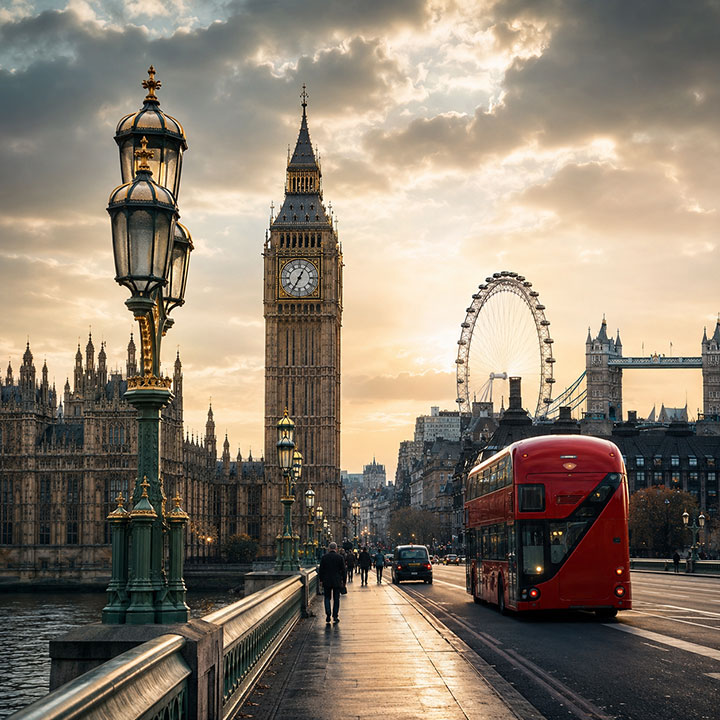
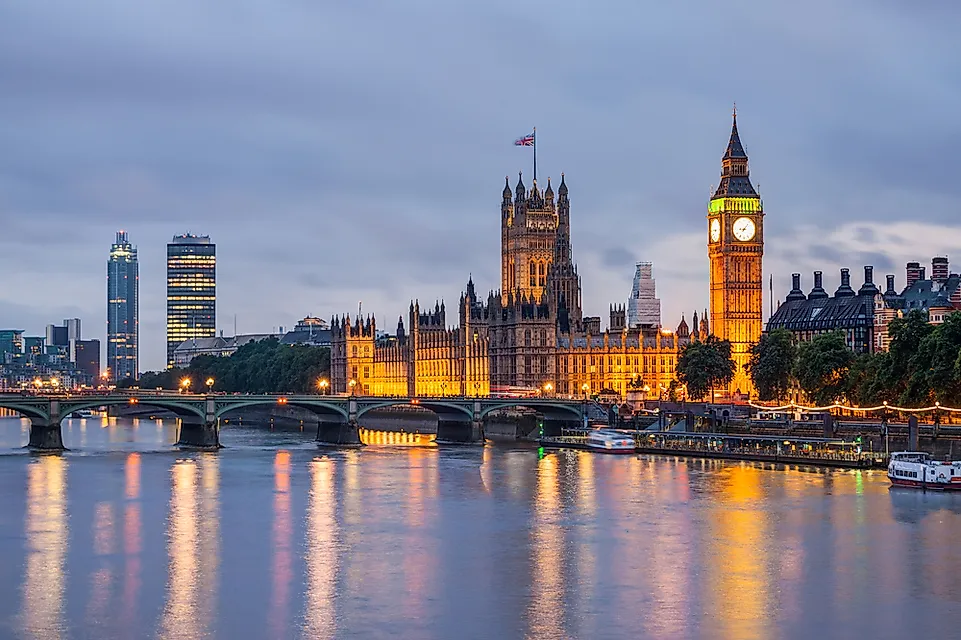
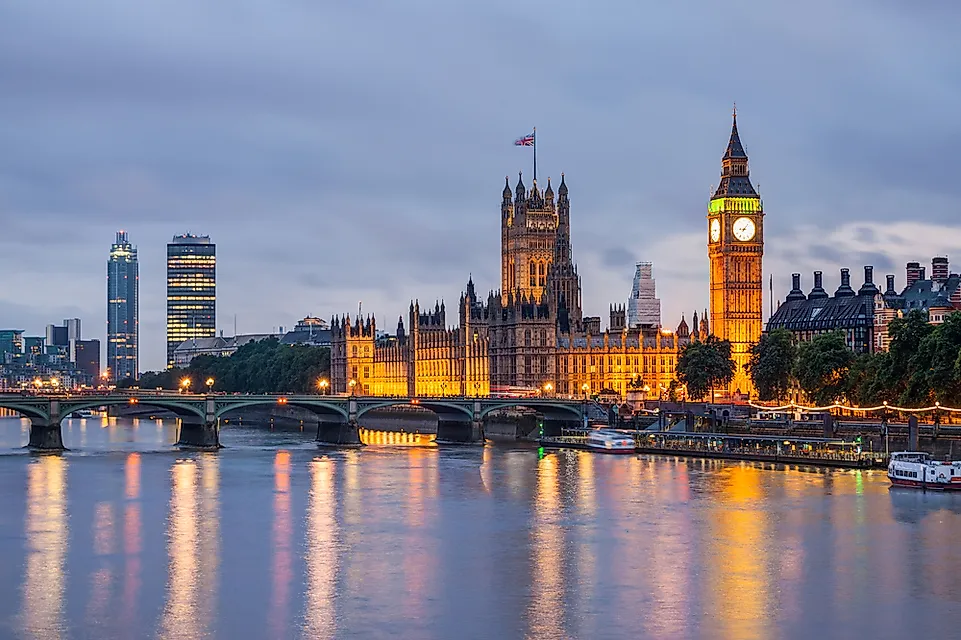
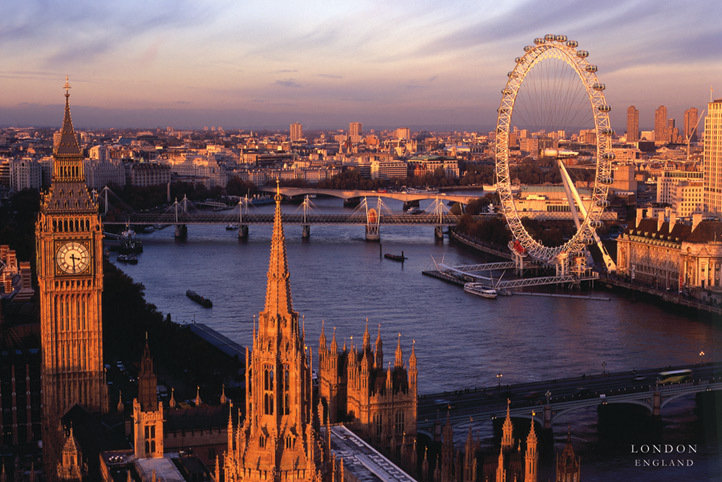
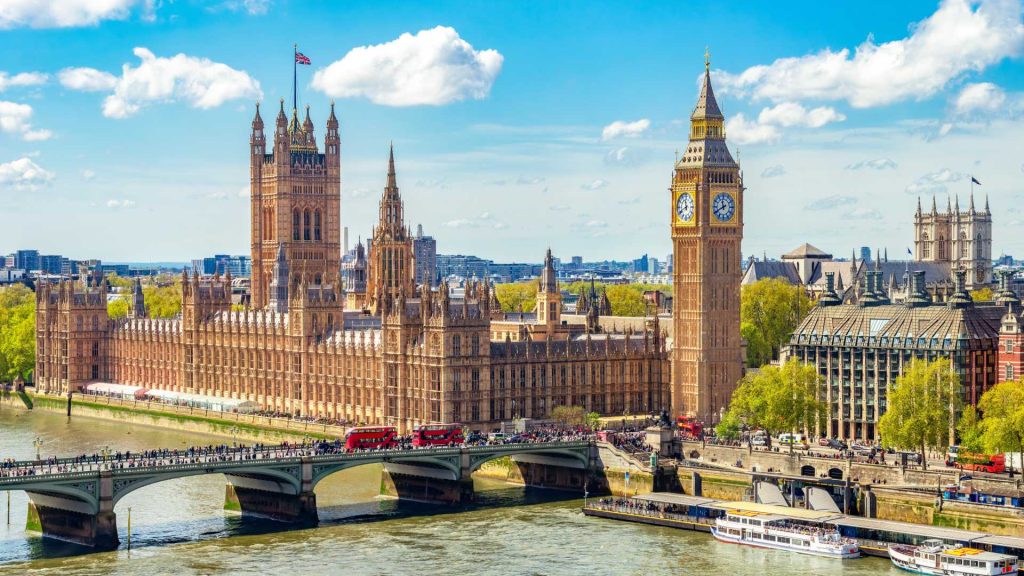
- The Palace of Westminster: A masterpiece of Gothic Revival design and a global symbol of parliamentary authority, featuring the spectacular clock tower known as Big Ben. This palace is located in Westminster.
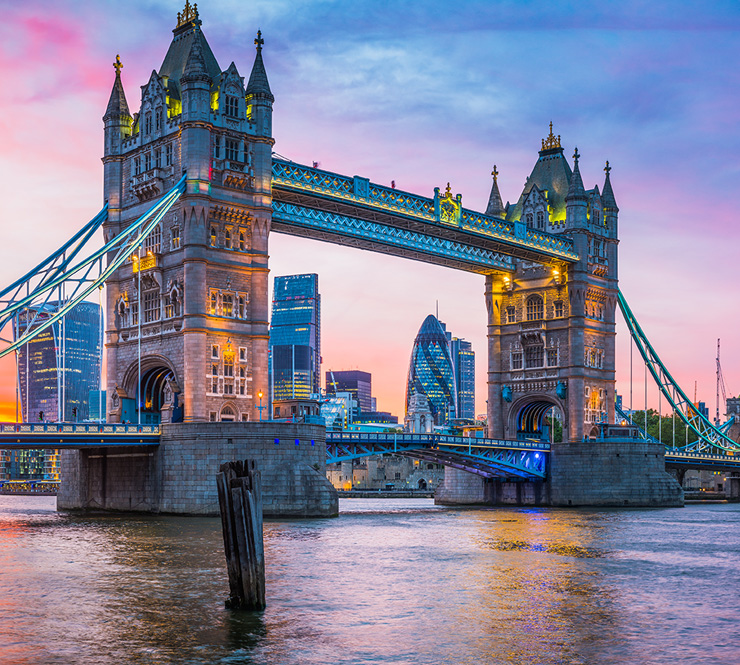
- Tower Bridge: A premier feat of Victorian engineering that combined a massive steel framework with ornate stone cladding to manage the intense river traffic of the world’s busiest port. This bridge is located between the City of London and Southwark.
- The Victoria and Albert Museum: Founded following the Great Exhibition of 1851, this museum was designed to showcase the best of art, design, and Victorian manufacturing prowess. This museum is located in South Kensington.
- The Royal Albert Hall: Built as a memorial to Prince Albert, this “Village Hall of the Empire” remains one of the world’s most famous stages for music and national celebration. This hall is located in South Kensington.
- St Pancras International: A magnificent cathedral of the railway age, featuring the breathtaking Barlow Train Shed which represented the pinnacle of Victorian travel and structural ambition. This station is located in Camden, London.
- Crossness Pumping Station: A spectacular example of Victorian industrial architecture, part of the revolutionary sewage system designed to “cleanse” the capital of the Great Stink. This site is located in Abbey Wood, London.
Modernism and post-war rebuilding
Modernism in London is a narrative of spectacular resilience and social idealism, emerging from the necessity to reinvent the city following the devastation of the 20th century. Moving away from the ornamental traditions of the past, post-war architects embraced the “Machine Age” aesthetic, using reinforced concrete, glass, and open floor plans to create a new urban laboratory for contemporary living. This era is defined by the transformation of bombed-out ruins into groundbreaking “cities within a city,” where residential life, culture, and nature were integrated into single, monumental complexes. To explore this branch is to see the physical performance of a nation looking forward, creating the bold, Brutalist, and high-tech structures that have become the heritage of the future.
- The Barbican: A world-renowned post-war residential and cultural complex and a masterpiece of Brutalist design, built on an area heavily devastated during the Blitz. This complex is located in the City of London.
- The Royal Festival Hall: The centerpiece of the 1951 Festival of Britain, designed to lift the national spirit and showcase the best of modern democratic architecture. This hall is located on the South Bank, London.
- Tate Modern: A monumental example of industrial repurposing, where the former Bankside Power Station was transformed into a global hub for contemporary art. This gallery is located in Bankside, Southwark.
- The Lloyd’s Building: A landmark of “High-Tech” architecture designed by Richard Rogers, famously featuring its services on the outside to maximize interior space. This building is located in the City of London.
- The Gherkin (30 St Mary Axe): A pioneer of contemporary sustainable design that catalyzed the 21st-century transformation of the City’s financial district skyline. This skyscraper is located in the City of London.
- Golden Lane Estate: An early and influential post-war housing development that experimented with the “streets in the sky” concept to provide high-quality urban living for City residents. This estate is located in the City of London.
Contemporary architecture
Contemporary architecture in London is a bold narrative of the city’s 21st-century economic ambition and its commitment to environmental sustainability. This era is defined by the rise of “iconic” glass-and-steel structures that have dramatically reshaped the skyline, often designed by world-renowned “starchitects.” Moving beyond the rigid forms of the past, contemporary design in the capital embraces fluid shapes, innovative materials, and a focus on creating vibrant, multi-use public spaces. This branch reveals how London has become a global laboratory for architectural experimentation, where historic conservation meets the cutting-edge requirements of a digital-age world power.
- The Shard: A vertical city of glass and the tallest building in Western Europe, serving as a soaring symbol of London’s modern economic and architectural reach. This skyscraper is located in Southwark.
- The Gherkin (30 St Mary Axe): A pioneer of contemporary sustainable design that catalyzed the transformation of the City’s financial district into a world-leading hub for modern architecture. This building is located in the City of London.
- Canary Wharf: A second financial district built upon abandoned industrial docks, representing one of the largest and most successful urban regeneration projects in the world. This district is located in the Docklands, East London.
- The Bloomberg Building: A sustainable masterpiece that houses the Mithraeum in its basement, perfectly blending high-tech modern office space with the city’s deep Roman foundations. This building is located in the City of London.
- The London Eye: Originally a temporary millennium celebration, this giant observation wheel has become a permanent icon of the modern skyline and a symbol of London’s global appeal. This landmark is located on the South Bank.
- Battersea Power Station: A magnificent industrial landmark recently transformed into a vibrant neighborhood of shops, homes, and offices, showcasing the latest in contemporary heritage repurposing. This site is located in Battersea.
Royal palaces and ceremonial spaces
This sub-category explores the “Theatre of State,” where architecture and urban design are used to project the continuity, dignity, and power of the British Monarchy. It is a narrative of grand ceremonial routes and magnificent palaces that serve as both the working headquarters of the Sovereign and the focal points for national celebration. From the Tudor brickwork of St James’s to the neoclassical grandeur of the Mall, these spaces are designed to facilitate the complex rituals—such as the State Opening of Parliament and Trooping the Colour—that define the visual identity of the British state. Understanding these spaces reveals the physical framework within which the “unwritten” constitution is performed for a global audience.
- Buckingham Palace: The official London residence of the Sovereign and the administrative heart of the Monarchy, featuring the iconic balcony used for national celebrations. This palace is located in Westminster.
- St James’s Palace: The senior palace of the Sovereign and the official seat of the Royal Court, featuring a historic 16th-century Tudor gatehouse. This palace is located in St James’s.
- Kensington Palace: A working royal residence and a historic site of royal birth and mourning, including the apartments where Queen Victoria was born. This palace is located in Kensington.
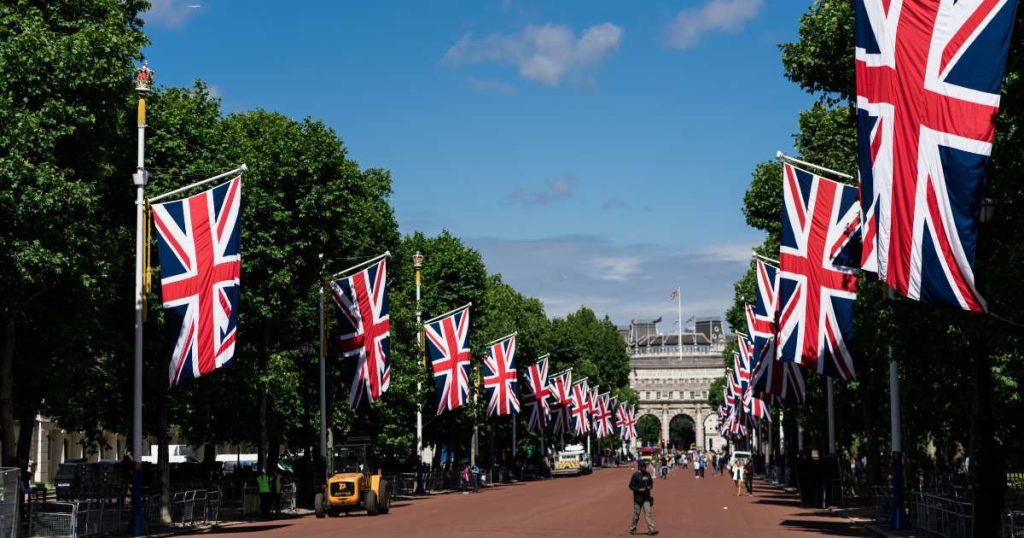
- The Mall: The grand, red-surfaced ceremonial route designed for spectacular royal processions and state occasions connecting Trafalgar Square to Buckingham Palace. This road is located in Westminster.
- Horse Guards Parade: The historic parade ground where the annual Trooping the Colour ceremony marks the Sovereign’s official birthday. This site is located in Whitehall, Westminster.
- The Tower of London: A historic royal palace and fortress that has protected the Crown Jewels for centuries and serves as the primary symbol of royal authority in the City. This fortress is located in the City of London.
- Clarence House: A grand royal residence that has served as the home for various senior members of the Royal Family, including Queen Elizabeth the Queen Mother and King Charles III. This house is located in St James’s.
London skyline and urban design
The London skyline is a dramatic visual narrative of the city’s two-millennium journey, where the ancient “bones” of Roman and medieval foundations support the glass-and-steel ambition of a global financial powerhouse. This branch explores the art of urban design—how the city has evolved from the rigid boundaries of its Roman walls and the baroque symmetry of the post-fire rebuilding to the bold, polycentric metropolis of today. It is a story of contrast and conversation, where the protective “viewing corridors” of St Paul’s Cathedral dictate the height and shape of contemporary skyscrapers. Understanding the skyline is the key to decoding London’s unique character, revealing a city that is fiercely protective of its heritage while remaining a world leader in innovative urban development.
- The Monument: Christopher Wren’s towering Doric column, designed to serve as a permanent vantage point for viewing the rebirth of the City after 1666. This monument is located in the City of London.
- The Shard: A “vertical city” of glass that has redefined the South Bank skyline, offering unparalleled 360-degree views across the entire capital. This skyscraper is located in Southwark.
- The Gherkin (30 St Mary Axe): A pioneer of contemporary design whose unique aerodynamic shape changed the face of the financial district and paved the way for a new generation of skyscrapers. This building is located in the City of London.
- The Sky Garden (20 Fenchurch Street): A public garden at the top of a commercial skyscraper, representing the modern urban design goal of integrating green space into the dense city core. This garden is located in the City of London.
- The London Eye: A giant observation wheel on the South Bank that provides a moving perspective of the historic relationship between the City of London and the City of Westminster. This landmark is located on the South Bank, London.
- Paternoster Square: A redesigned urban space next to St Paul’s Cathedral that demonstrates the modern challenge of balancing historic preservation with contemporary commercial use. This square is located in the City of London.